
This hub explains how blackjack online works at RocketPlay, from the first deal through to settlement. It covers the main blackjack rules, available game formats, basic decisions, house edge and bankroll control without repeating the separate live casino guide. Players who prefer a streamed table with a real dealer can continue to the Live Dealer Blackjack section. 18+ only.
How a hand of blackjack is played
A round starts when you choose a stake and receive two cards. The dealer also receives cards according to that table’s rules. Your aim is to finish closer to 21 than the dealer without going over. Your options:
- ➕Hit takes another card;
- ✋Stand keeps the current total;
- 2️⃣Double increases the original stake and gives one final card;
- ✂️Split turns an eligible pair into two separate hands.
After players finish their decisions, the dealer draws according to a fixed rule. A dealer bust means remaining player hands win. Equal totals normally push and return the original stake.
| 🃏 Result | Typical payout |
|---|---|
| Natural blackjack | 3:2 |
| Ordinary winning hand | 1:1 |
| Insurance win | 2:1 |
| Push | Stake returned |
⚠️ Check the payout: Always read the table information first. A 6:5 table pays only 1.2 units for a natural instead of 1.5. That difference significantly increases the casino advantage.
Good blackjack strategy starts with choosing 3:2 when an otherwise comparable table is available. For blackjack online, buttons replace physical table gestures, but the sequence of decisions remains the same.
Card values and how totals are counted
- 🔢Cards from 2 to 10 count at face value.
- 👑Jacks, queens and kings are worth 10.
- 🅰️An ace can count as either 1 or 11, whichever keeps the hand valid.
This flexible ace creates the distinction between soft and hard hands.
🧮 Example: A-6 is soft 17 because the ace can change from 11 to 1 if another card would otherwise cause a bust. By contrast, 10-7 is hard 17 because there is no flexible ace. A-7 is soft 18, while A-6-10 becomes hard 17 after the ace changes to 1.
A natural blackjack means an ace plus a ten-value card in the first two cards. Reaching 21 with three or more cards is still 21, but it is not a natural. Understanding these totals is the foundation of blackjack rules, because the correct hit, stand or double decision depends on how safely the hand can take another card.
Blackjack variants you will find in the lobby
RocketPlay has carried both RNG blackjack and live-dealer tables, alongside other card games such as baccarat. Publicly indexed RocketPlay game data has listed Microgaming-style RNG variants together with Evolution and Ezugi live blackjack. The lobby can change by provider, account and location, so the current game card should always be checked before play.
| 🎰 Variant | Hole-card / peek rule | Decks | Soft 17 | Approx. house edge with correct play |
|---|---|---|---|---|
| Vegas Single Deck | Dealer peek | 1 | Hit | ~0.31% |
| Vegas Strip | Dealer peek | 4 | Stand | ~0.35% |
| Atlantic City | Dealer peek | 8 | Stand | ~0.35% |
| Evolution Live Dealer Blackjack | No dealer peek | 8 | Stand | ~0.72% |
| Ezugi Blackjack | Dealer peek listed | 8 | Stand | ~0.11% |
The core blackjack rules remain recognisable, but deck count, hole-card handling, doubling and surrender can vary. These edge figures are mathematical estimates based on the listed rules, not promises of session results.
💡 Tip: Anyone who wants to play blackjack Australia should compare the actual rules displayed by the table rather than selecting a game by title or graphics alone.
House edge and the table rules that move it
House edge describes the casino’s mathematical advantage across a very large sample of hands. It does not mean a player will lose that exact percentage during one session. Under favourable 3:2 multi-deck conditions and correct basic play, blackjack can carry an edge below 1%, but small rule changes can move that figure noticeably.
| 📐 Rule | Approximate effect compared with favourable baseline |
|---|---|
| Single deck instead of eight decks | About 0.48 percentage points better for player |
| Six decks instead of eight | About 0.02 points better |
| Dealer hits soft 17 | About 0.22 points worse |
| No double after split | About 0.14 points worse |
| Late surrender against dealer 10 | About 0.07 points better |
| Blackjack pays 6:5 instead of 3:2 | About 1.39 points worse |
Among common house edge rules, 6:5 is the clearest warning sign. Its effect is much larger than changing from eight decks to six. The impact of dealer soft 17, DAS and surrender also depends on the complete ruleset.
📌 Note: A basic strategy chart should therefore match the table being played rather than be treated as universal. This matters with blackjack online, because two visually similar games can have different mathematics.
Basic strategy for hard hands
For a common four to eight-deck 3:2 game where the dealer stands on soft 17 and doubling after a split is allowed, hard-hand decisions can be grouped into a few practical blocks. The table below is a baseline rather than a substitute for the rules displayed by a particular game.
| ✋ Your hard total | Dealer 2-6 | Dealer 7-9 | Dealer 10 | Dealer A |
|---|---|---|---|---|
| 17+ | Stand | Stand | Stand | Stand |
| 13-16 | Stand | Hit | Hit | Hit |
| 12 | Stand on 4-6, hit 2-3 | Hit | Hit | Hit |
| 11 | Double | Double | Double | Hit |
| 10 | Double | Double vs 7-9 | Hit | Hit |
| 9 | Double vs 3-6, otherwise hit | Hit | Hit | Hit |
| 8 or less | Hit | Hit | Hit | Hit |
The logic behind this part of blackjack strategy is simple. Weak dealer cards, particularly 4, 5 and 6, create more situations where standing on a modest total makes sense. Against 7 through ace, the dealer is more likely to finish with a strong total, so hitting becomes necessary more often. If surrender is available, it can also change selected hard 15 and 16 decisions.
Basic strategy for soft hands
Soft totals can take an extra card with less immediate bust risk, so they should not be handled like hard totals. This is a common mistake in blackjack online, particularly with A-6 and A-7. Standing too early gives up the flexibility that makes an ace valuable.
| 🅰️ Soft hand | Dealer 2 | Dealer 3-4 | Dealer 5-6 | Dealer 7-8 | Dealer 9-A |
|---|---|---|---|---|---|
| A-2, A-3 | Hit | Hit | Double | Hit | Hit |
| A-4, A-5 | Hit | Double | Double | Hit | Hit |
| A-6 | Hit | Double | Double | Hit | Hit |
| A-7 | Stand | Double | Double | Stand | Hit |
| A-8, A-9 | Stand | Stand | Stand | Stand | Stand |
Soft 17 is generally a hit for the player. Soft 18 is much stronger, but doubling can still be the better decision against selected weak dealer cards. The reason is not that doubling makes the cards luckier, but that it increases the stake only in situations with favourable expected value.
💡 Tip: When players play blackjack Australia through different providers, these decisions should be matched to the deck count and soft-17 condition shown by that table.
Splitting and doubling decisions
Splits and doubles increase the amount exposed during a round, so they should be based on the cards rather than an attempt to recover a previous loss. A pair is not automatically worth splitting. Two 10s already make a strong 20, while two 5s work better as a hard 10.
| ✌️ Pair | Typical decision with DAS available |
|---|---|
| A-A, 8-8 | Split |
| 10-10 | Stand |
| 9-9 | Split vs 2-6 and 8-9; stand vs 7, 10, A |
| 7-7 | Split vs 2-7; otherwise hit |
| 6-6 | Split vs 2-6; otherwise hit |
| 5-5 | Treat as hard 10, usually double vs 2-9 |
| 4-4 | Split vs 5-6; otherwise hit |
| 2-2, 3-3 | Split vs 2-7; otherwise hit |
Doubling is strongest when one extra card has a good chance of producing a strong total while the dealer is vulnerable. That is why hard 10 or 11 and selected soft hands appear repeatedly in blackjack strategy tables.
📌 Note: A table that does not allow double after split changes several pair decisions, so DAS should be checked before relying on the chart.
Insurance, even money and side bets
Insurance is a separate wager offered when the dealer shows an ace. It usually costs half the original stake and pays 2:1 if the dealer has blackjack. With an ordinary fresh multi-deck shoe, there are not enough ten-value cards to make insurance attractive without additional information about card composition.
The same mathematics applies to even money. When a player has blackjack against a dealer ace, taking even money is effectively the same as buying insurance. The key insurance odds are therefore easy to misread: a 2:1 payout does not automatically create a fair bet.
💡 Tip: Standard basic play normally declines both insurance and even money.
Side bets such as Perfect Pairs or 21+3 use separate paytables and generally carry a higher casino advantage than the main blackjack hand. Players who play blackjack Australia through offshore services should assess them as separate wagers, not as a way to improve the expected return of the base game.
RNG tables against live dealer blackjack
RNG blackjack and live dealer blackjack share the same objective but differ considerably in pace and presentation. RNG games use software to generate each hand and can usually move as quickly as the player makes decisions. Live tables use physical cards, cameras and a real dealer, so each betting window and deal follows the studio’s timetable.
| ⚖️ Feature | RNG blackjack | Live dealer blackjack |
|---|---|---|
| Pace | Fast, often player-controlled | Dealer-paced |
| Betting limits | Vary by title | Vary by table and studio |
| Demo | May be available on selected titles | Usually unavailable for live play |
| Bonus wagering | Depends on promotion | Depends on promotion, often reduced or excluded |
| Cards | RNG-generated result | Physical shoe and dealer |
Players looking specifically for streamed games should continue to the Live Dealer Blackjack section, where providers, tables and studio formats can be covered in detail. For blackjack online, this hub remains the rules and mathematics reference rather than duplicating the live catalogue.
Card counting and why it does not work online
Card counting relies on information from cards already dealt remaining relevant to future hands. In most RNG blackjack games, the virtual shoe is reset or reshuffled between rounds, so the previous hand does not provide a useful running count for the next one. The software result still follows the game’s stated rules, but there is no practical shoe penetration to track.
Live blackjack is different because real cards can come from a multi-deck shoe. Even there, frequent shuffling, cut cards, limited penetration and changing tables reduce the usefulness of maintaining a count. It should not be presented as a dependable method for beating blackjack online.
💡 Tip: A player learning blackjack rules gains more practical value from checking the payout, soft-17 condition, doubling permissions and surrender rule than from trying to predict the next card sequence.
Bankroll rules and session limits at the table
A bankroll plan does not reduce the mathematical house edge. Its purpose is to limit exposure and make a stopping point clear before the first hand. A conservative example is to keep the base stake around 1% of the amount allocated to a session, while remembering that splits and doubles can place several units at risk at once. A budget for blackjack online should be treated as a fixed entertainment limit, not an amount that must be wagered completely.
| 💰 Session bankroll | Example base stake cap | Approximate number of base bets |
|---|---|---|
| 100 AUD | 1 AUD | 100 |
| 300 AUD | 3 AUD | 100 |
| 1,000 AUD | 10 AUD | 100 |
The figures are examples of unit sizing, not financial advice and not a guarantee that a bankroll will last for 100 hands. Splits, doubles and normal variance can shorten a session substantially. The same unit-sizing logic applies if you switch from the table to pokies such as Lightning Link.
⚠️ Key point: Martingale and other stake progressions do not change expected return. If you play blackjack Australia, set both a money limit and a time limit before starting rather than increasing bets after losses.
🆘 Support: Gambling Help Online provides free and confidential support on 1800 858 858 and at gamblinghelponline.org.au.
Blackjack FAQ for Australian players
What is the house edge with basic strategy?
In a favourable 3:2 multi-deck game, correct blackjack strategy can reduce the house edge to below 1%. The precise figure depends on deck count, soft 17, doubling, surrender and split conditions.
Why should you avoid 6:5 blackjack tables?
A 6:5 natural pays less than 3:2 and can add about 1.39 percentage points to the house edge under otherwise comparable rules. That is a substantial mathematical disadvantage for anyone playing blackjack online.
Is insurance ever worth taking?
Standard basic strategy normally says no. The 2:1 payout does not compensate for the probability of the dealer holding a ten-value card under ordinary conditions.
Can I play blackjack for free in demo mode?
Some RNG titles may offer demo play depending on provider and location. Live dealer tables normally require real-money play, so check the individual game tile before opening a table.
Do blackjack hands count towards bonus wagering?
It depends on the promotion. Table games may contribute at a reduced rate or be excluded completely, so the current bonus terms should be checked before assuming a blackjack stake counts in full. The same applies to points in the loyalty program.
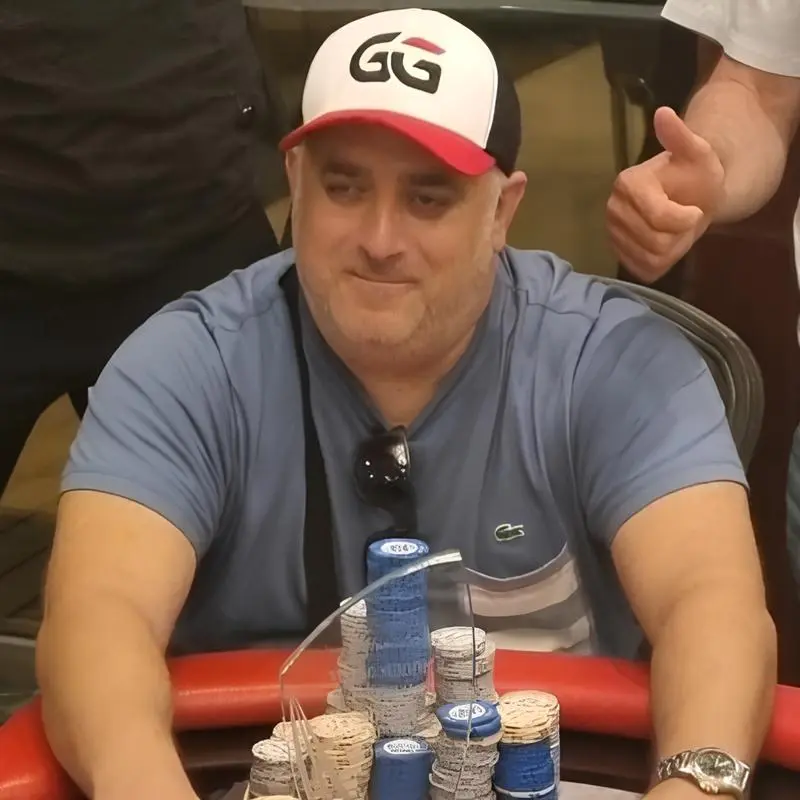
Mike Waters
Australian Casino Analyst and Gambling Writer
Mike Waters is an Australian casino analyst with extensive experience across poker, pokies, blackjack and online casino platforms. His background in competitive poker and wider gambling analysis gives him a practical perspective on casino games, bonuses, payment methods and the conditions players should understand before using a platform.
Mike focuses on clear, balanced information for Australian readers. When reviewing casinos or explaining bonuses, payments and gaming features, he looks beyond promotional claims and pays attention to wagering terms, withdrawal requirements, usability and other details that can affect the player experience.
in · LinkedIn profile